Warn


One of the ways that the Stormwater Program accomplishes its mission to "Protect People and Property from Harmful Stormwater Runoff" is through WARNING the public and property owners of flooding and erosion hazards.

Real-Time flood warning banner
 

CITY NEWS fd-code red spring storms full.png

Fort Worth CodeRED QR code  


For more information about Code Red Alerts, visit fortworthtexas.gov/departments/emo/code-red-alerts.


Planning and Spotlight tab iconFlooding In Fort Worth

Warn Banner with Icon

All rivers, streams, tributaries, and ditches - regardless of size - have the potential to flood.  In Fort Worth, major sources of flooding include the...

  • Clear Fork Trinity River
  • West Fork Trinity River
  • Mary's Creek, Marine Creek
  • Village Creek, Dry Branch Creek
  • Big Fossil Creek, Big Bear Creek
  • Sycamore Creek
  • White's Branch.

Hazardous flooding away from larger creeks and channels is also frequent within the City as stormwater runoff drains from upstream areas toward larger streams and channels.

Flooding in Fort Worth is typically produced by heavy rainfall from frontal type storms that occur during the spring and fall months. Flash floods are the most common type of flooding in Fort Worth. Those flood events can happen near rivers but also in urban areas, mostly inside the 820 loop.

The City continues to provide citizens with additional tools to identify and mitigate flood risk with the goal of protecting people and property from harmful stormwater runoff before, during, and after a flood event.


The Stormwater Management Program

To learn more information, read the documents listed below.
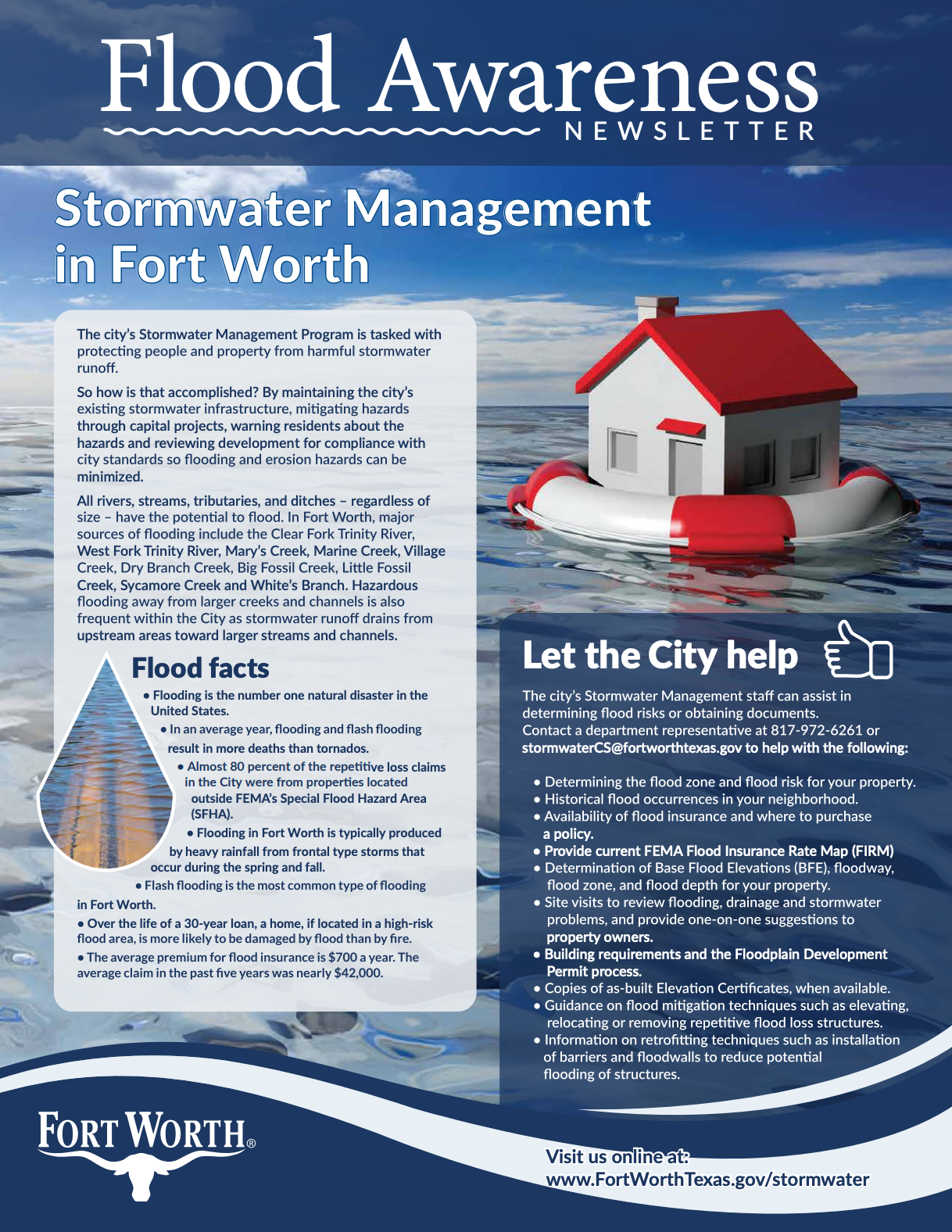
Flood Awareness NewsletterStormwater Management Program Master PlanRunoff Rundown Newsletter

Planning and Spotlight tab iconFlood Warning System

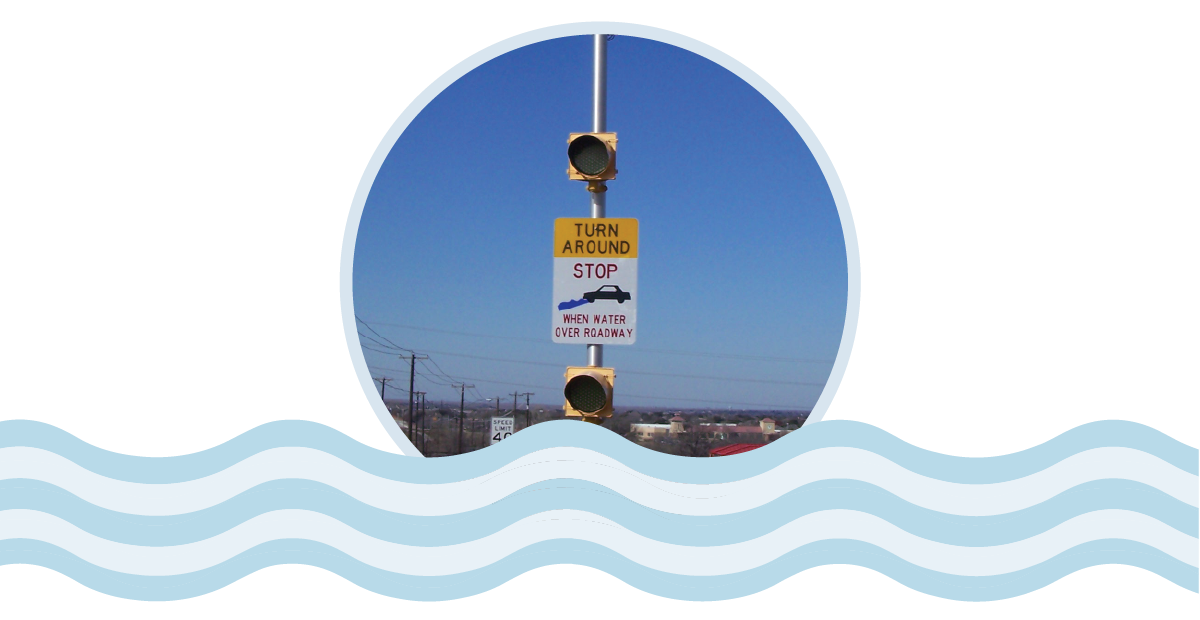
High Water Warning Flashers (HWWS)

Graphic of Turn Around Stop when underwater light pole
Turn Around Don't Drown logo
Man standing in water with car submerged

Purposes and Objective

The flood warning system in Fort Worth, known as the High-Water Warning System (HWWS), relies on water level measurements made at approximately 55 low-water road crossings throughout the city. Roadside flashers immediately warn drivers of the flood hazard at these flood prone road crossings.

View High Water Warning Flasher Locations Map

Enhanced Text Alert

Rising flood water at these HWWS sites trigger automated alarms which are sent to first responders. First responders place barricades to prevent vehicles from entering flooded streets. Drivers should not go around barricades and drivers should safely turn around when the flashers go off. Weather data, including rainfall measurements prior to flooding, is collected at 39 low-water crossings and 28 weather stations. 

The Goals of the Flood Warning System

The Flood Warning System was developed through a Texas Water Development Board (TWDB) grant. The goals of the Flood Warning System project were:

  • Improve system reliability
  • Expand the gaging network with additional rain gaging sites
  • Upgrade data collection and data dissemination (communication tool) software
  • Develop a Flood Response Plan

Planning and Spotlight tab iconHazard Road Overtopping (HROM)

The City of Fort Worth's Hazardous Road Overtopping Mitigation (HROM) Program is an ongoing effort to identify hazardous road locations due to flooding, prioritize them, and where feasible, develop solutions to make them safer. The HROM Program was created in response to life-threatening and fatal incidents associated with flooded roads, usually at stream crossings.

HROM Fact Sheet
(PDF,2MB)(PDF, 2MB)
HROM FAQ's
(PDF,303KB)(PDF, 439KB)
 

Planning and Spotlight tab iconNon-FEMA Flood Risk Area

Flood Risk Outside of the FEMA Floodplain

Cleaning blocked inlets by TPW crew

While FEMA maps flood risk along major streams and creeks, most reported flooding in Fort Worth actually occurs outside of the FEMA Floodplain, in what the City refers to as “Non-FEMA Flood Risk Areas”. The City has categorized Non-FEMA Flood Risk Areas into two categories. Areas where the City has evaluated the non-FEMA flood risk in detail are called “City Flood Risk Areas” (CFRA), and these are now used to regulate development. City Council approved these new regulations in June 2024, and the regulations took effect July 15, 2024. In contrast, the non-FEMA areas where the City has less detailed mapping, called “Potential High Water Areas” (PHWA), are used to warn about potential flood risks.

In order to better protect property owners in CFRAs from flood risk, the City revised the existing Floodplain Provisions Ordinance and  the Stormwater Criteria Manual. The CFRA regulations will affect development activity on less than 1 acre and located in a CFRA. Such development activity will require:

  • Elevation of structures two (2) feet above the 100-year flood elevation, and;
  • Submission of a certificate from an engineer to document that the development will not cause increased flood risk to neighboring properties.

A phased rollout of mapping to help communicate flood risk outside of the FEMA Floodplains was performed and the mapping rolled out according to the timeframes below.

Phase1-CFRA-v4.png      Phase2-PHWA-v4.png     FLD-RSK-VWR.png

In the City of Fort Worth, there are more flood insurance policies and claims located outside FEMA floodplains than inside FEMA floodplains.

fema-in-out-chrt-v3r.png

 Image of a flooded residential road


Flood Risk Letters